
“`html
Soundproofing Tips for Music Producers
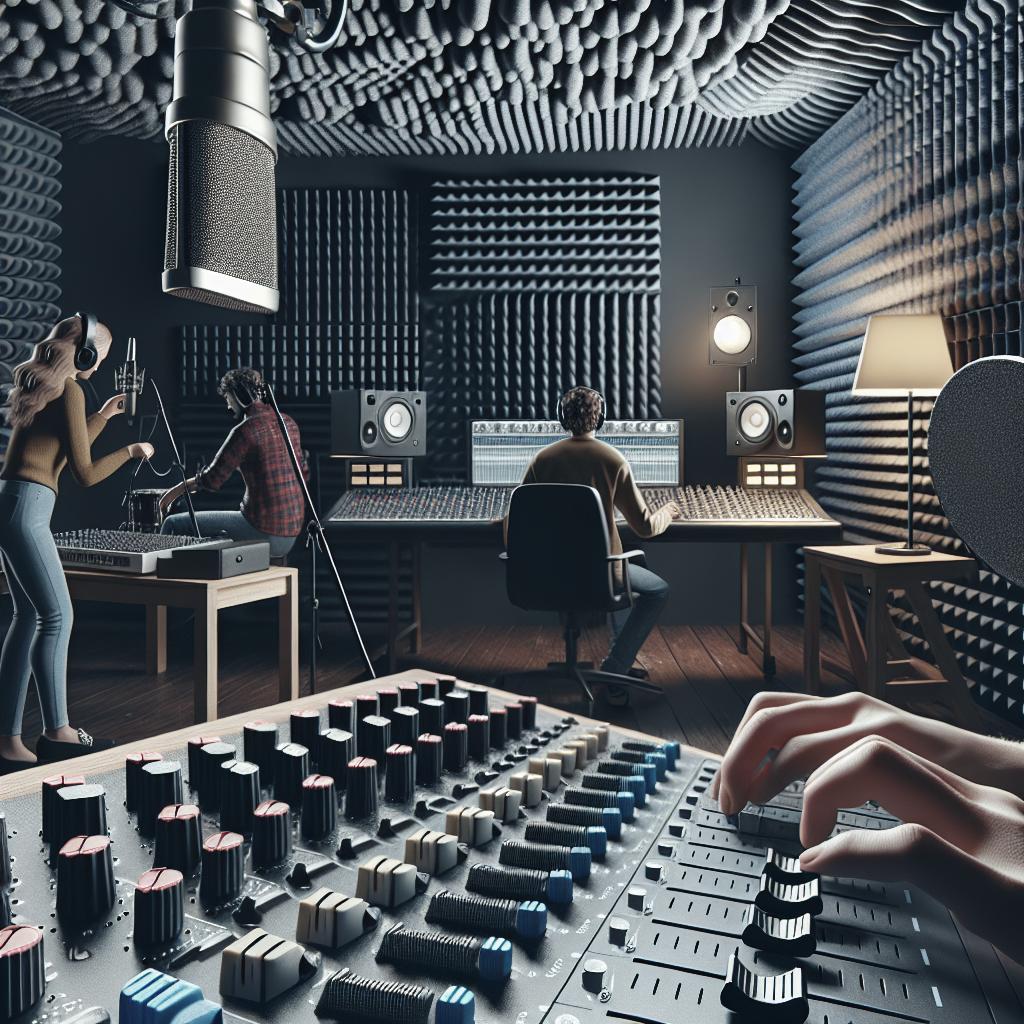
Creating the perfect home studio environment is essential for any music producer looking to elevate their craft. Soundproofing is a critical component not just for ensuring sound quality but also for minimizing disturbances to and from your environment. In this intricate guide, we explore the nuances of setting up an acoustically optimal home recording studio. From understanding the tangible benefits of soundproofing to discerning between solutions best suited for your needs, we navigate the key aspects of achieving superior sound isolation. Discover thoughtful guidance on where to strategically install soundproofing in your studio and unlock the potential to transform any space into a haven for creativity and acoustic excellence.
Is Your Home Recording Studio Working for You?
Creating music is a deeply personal and immersive experience, and having a home recording studio that meets your needs is paramount. For many music producers, the journey starts with defining what their studio must achieve. Is it a sanctuary where creativity flows unimpeded by external noise, or is it a professional space designed to produce commercially competitive tracks? Identifying these priorities is the first step in evaluating whether your current setup serves your intentions.
Common challenges in home studios often arise from insufficient soundproofing. Sound leakage can disrupt both your workflow and your surroundings, potentially leading to conflicts with neighbors or household members. Furthermore, poor acoustics may result in recordings that fail to accurately capture the nuances of your artistry. By examining your space critically, you can determine if adjustments are necessary to align your studio with your artistic goals.
Evaluating your studio’s performance isn’t just about troubleshooting issues; it’s also an opportunity to mark the evolution of your sound. As your skills and equipment advance, so should your studio’s capabilities, ensuring that it remains a source of inspiration and not a hindrance.
What Are the Benefits of Soundproofing a Music Studio?
Soundproofing a music studio offers tremendous advantages that can significantly enhance both the quality of your productions and your overall creativity. The primary benefit is the reduction of external noise, enabling you to focus more profoundly on your work without distractions. When external sounds are minimized, you gain the freedom to explore dynamic soundscapes and intricate arrangements without compromise.
Moreover, soundproofing allows you to work at any hour without worrying about causing disturbances. This is particularly beneficial for producers whose inspiration strikes at unconventional times. With effective soundproofing measures in place, your home studio becomes a versatile environment where the creative process can flourish uninhibited.
Soundproofing also plays an essential role in achieving accurate sound reproduction. By controlling reflections and reverberations, you ensure that what you hear in your studio is a true representation of your music. This fidelity is critical for making informed mixing decisions that translate well beyond the confines of your studio into various listening environments.
Choosing Soundproofing Solutions for Studios: Soundproofing vs. Sound Absorption
Understanding the distinction between soundproofing and sound absorption is crucial when choosing the right solutions for your studio. Soundproofing refers to the practice of preventing sound from entering or leaving a room. Its objective is to create a barrier between your studio and the outside world, often involving structural changes such as adding mass to walls, floors, and ceilings.
Conversely, sound absorption aims to improve the acoustics within the space by managing sound reflections and echo. This is commonly achieved through the use of acoustic panels or foam, which absorb excess sound waves, leading to clearer sound quality and a more controlled listening environment.
Both soundproofing and sound absorption are valuable for different reasons. While soundproofing addresses the external noise factors, sound absorption focuses on the internal acoustics. The key is to identify the specific challenges you face and choose solutions that best address those needs, creating a balanced acoustic environment within your studio.
Where to Install Your Soundproofing Studio
Once you’ve decided on the appropriate soundproofing and sound absorption materials, knowing where to install them is the next critical step. Walls and ceilings are prime candidates for soundproofing treatment. Adding layers of dense materials like mass-loaded vinyl or specially designed plaster can significantly reduce noise transmission.
Floors should not be overlooked, especially in multi-story buildings or if your studio is above living spaces. Implementing floating floors, carpet underlayments, or soundproofing mats can all contribute to minimizing sound traversal through building structures.
Strategically placing sound absorption materials within your studio can also enhance its acoustic performance. Corner bass traps tackle low-frequency buildups, while placing acoustic panels at key reflection points on walls can tame mids and highs, crafting a balanced soundstage. Careful placement ensures that your studio maintains both sound isolation and acoustic fidelity, providing an environment conducive to high-quality production.
Lessons Learned: Summarizing Soundproofing Insights
| Section | Key Points |
|---|---|
| Is Your Home Recording Studio Working for You? | Evaluate your studio’s effectiveness based on sound quality and external noise issues. Ensure it aligns with your creative goals. |
| What Are the Benefits of Soundproofing a Music Studio? | Reduces external noise, allows flexible working hours, and ensures accurate sound production. |
| Choosing Soundproofing Solutions for Studios: Soundproofing vs. Sound Absorption | Soundproofing blocks external noise; sound absorption enhances internal acoustics. Use both strategically for best results. |
| Where to Install Your Soundproofing Studio | Apply soundproofing to walls, floors, and ceilings; use sound absorption strategically within the studio to manage acoustics. |
“`

