
“`html
Mastering the Phaser Effect: An Essential Guide
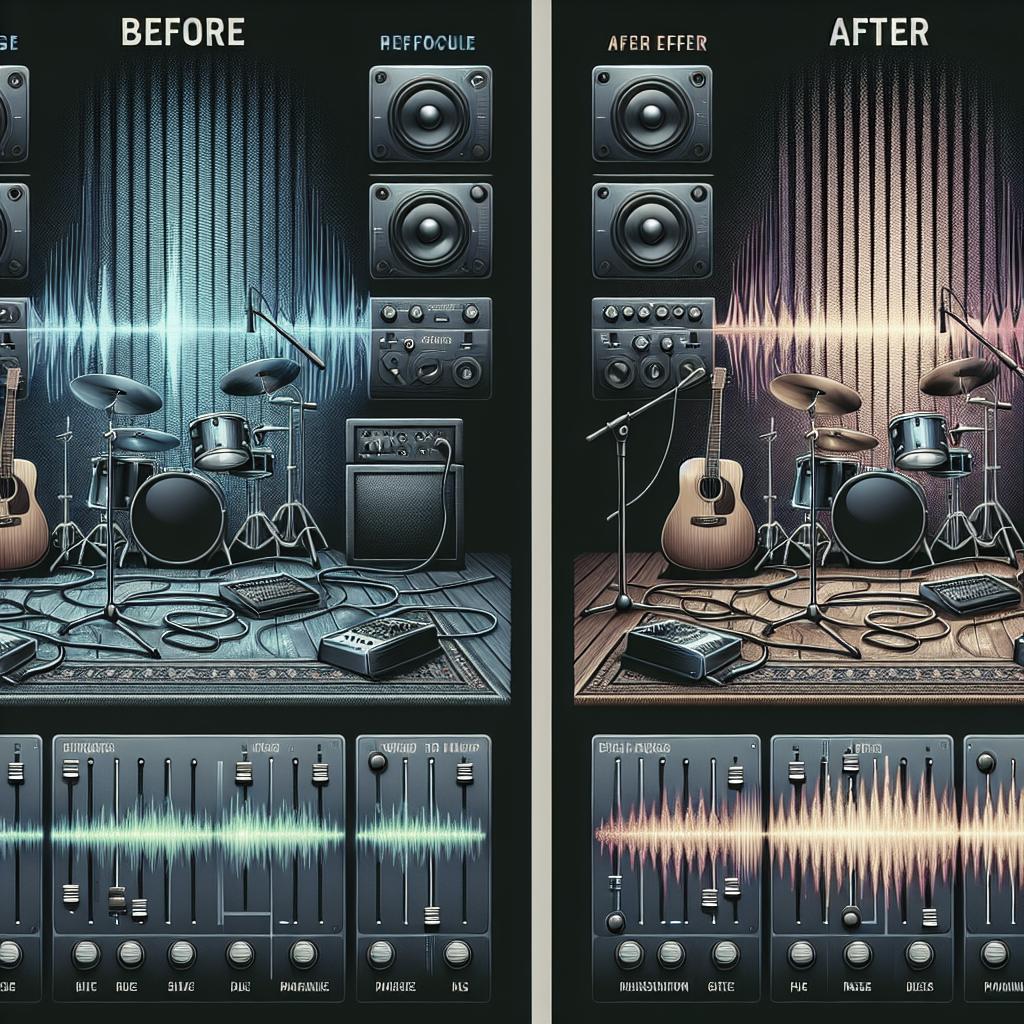
Music production is a realm where creativity meets technology, providing artists with a palette of effects to color their soundscape. Among these, the phaser effect stands out as a unique tool for adding depth and movement to music. This blog post will guide you through understanding and utilizing the phaser effect by comparing it first with flanging, exploring the sweeping system that defines its character, and discussing advanced techniques like adding more notches and incorporating voltage vectors. We’ll also explore practical applications of phaser pedals in musical compositions, using examples across genres. Whether you’re a budding musician or an experienced producer, mastering the phaser effect can elevate your sound, offering new sonic landscapes to explore. Dive in with us and unlock the phasing magic that can transform your music!
Flanging First
To truly grasp the nuances of phasing, it’s essential to first understand its close cousin, flanging. Both effects thrive on time-based modulation, but they differ in the intricacies of their sound. Flanging is created by mixing two identical audio signals together, with one signal delayed by a small, gradually changing amount. As the delayed signal sweeps up and down in delay time, it interacts with the original signal, creating a series of peaks and troughs in the frequency response. This results in a characteristic “jet plane” or “spacey whoosh” sound.
Flanging is often characterized by its dramatic swooshing effect, emulating the sound of classic rock and psychedelic music where its presence is undeniable. By employing comb filters, flanging shifts the audio’s phase, creating those distinct peaks and notches in the frequency spectrum. Experimenting with flange settings, such as the rate and depth, can yield a wide array of textures, ranging from subtle and wavy modulation to extreme and swirling resonance. Understanding these dynamics provides a solid foundation for delving into the world of phasers.
Phasing
While flanging and phasing may appear similar on the surface, phasers stand out because of the way they manipulate the audio signal. Phasing involves splitting the audio signal into several paths before introducing a series of all-pass filters that alter the phase relationships within the frequency range. These modified signals are then recombined, creating interference patterns that deliver the lush, sweeping textures characteristic of phasers.
The resultant sound from a phaser is akin to a gentle, flowing wave that can add emotional depth to any piece of music. This phase-altering process can resonate with listeners by infusing tracks with dynamic movement and emotional shifts. Over the years, phasing has become a staple in various genres, from funk and rock to electronic and ambient music, proving its versatility and emotional power.
All Things Will Pass!
The charm of phasers lies in their ability to create movement and change in the auditory experience. The sweeping nature of a phaser’s modulation demonstrates that all things, indeed, are transient and ever-changing. This concept doesn’t just resonate in the auditory realm, but also metaphorically in life, illustrating the transient beauty that music captures.
By harnessing the natural passing of frequencies and phases, a musician can craft an evolving sonic landscape that mirrors the dynamic journey of life. The phaser effect’s gentle modulation can create a sense of passing time or transitioning moods, making it a valuable tool in compositions that aim to tell intricate stories or evoke profound emotions. It serves as a reminder that music, like life, is a constant evolution.
Sweeper System
At the heart of phasers is the sweeper system, which is responsible for the fluctuation of frequencies that characterizes phasing. This system often uses a low-frequency oscillator (LFO) to modulate the phase relationships of the audio signal. By adjusting this LFO, musicians and producers can control the rate and depth of the sweeping effect, customizing the phaser to fit the mood and tempo of the music.
The sweeper system offers a canvas for sonic painters, allowing them to play with the rate of sweep from slow and somber to fast and frenetic. Understanding how to control the sweeper system’s parameters enables musicians to tailor the phaser effect to underscore particular emotional tones or musical directions. Whether you crave subtle, nuanced movements or wild, transformative sweeps, the sweeper system is your key to unlocking these possibilities.
Adding More Notches & Feedback
Venturing beyond the basic phaser setup, adding more notches or resonant points can enrich your audio tapestry, resulting in a fuller and more complex sound. These additional notches expand the phaser effect, weaving intricate patterns into the audio that can drastically alter the rhythmic feel and emotional subtleties of your music.
Incorporating feedback into the phaser signal takes this complexity a step further. Feedback loops tend to intensify the peaks and notches, offering a more resonant and pronounced effect. By adjusting the amount of feedback, you can amplify or mellow the phaser’s impact, paving the way for experimentation that can lead your compositions to new auditory heights. It’s this interplay of notches and feedback that can transform a simple melody into an evocative sound journey.
Voltage Vectors
In the realm of digital and analog synthesizers, voltage vectors can act as powerful allies, bringing a nuanced control over the phaser effect. Voltage vectors, essentially control voltage signals, can modulate various parameters of the phaser, such as sweep range and LFO rate, in a highly precise manner.
This precise level of control enables more intricate sonic explorations, allowing the musician to craft complex layers of sound and motion. Whether through sweeping arpeggios or evolving ambient textures, utilizing voltage vectors in combination with phasers can yield rich, immersive listening experiences that push the boundaries of conventional music production.
FIVE PHASER PEDAL USES
The versatility of phaser pedals knows no bounds. First, they can add a subtle shimmer to clean guitar tones, injecting life and interest into even the simplest of riffs. Second, phasers can enrich heavily distorted guitar leads, adding a swirling aura that complements solos and melodic lines.
Third, in the world of keyboards and synthesizers, phasers can lend a textured, atmospheric quality to pad sounds, embedding an organic feel into digital audio. Fourth, drummers can benefit by using phasers on cymbals or snare hits to introduce rhythmic variance and dynamic motion to their percussive elements. Lastly, vocalists can embellish their voice recordings with phasers for a dreamy, other-worldly effect, transforming ordinary vocals into captivating auditory experiences.
Popular
Throughout the decades, the phaser effect has maintained its status as a popular choice in both live and studio settings. Artists such as Pink Floyd and Jimi Hendrix pioneered its use in the 60s and 70s, transforming the sonic landscape with their innovative applications of phasing in their tracks, leaving an indelible mark on music history.
Today’s musicians continue to leverage phasers across genres, from ambient and techno to rock and hip-hop. The effect’s ability to transcend time and stylistic boundaries speaks to its enduring appeal and creative potential. Its continued popularity is a testament to the phaser’s unique ability to connect with human emotions and enhance the narratives woven into music.
Search.
In the quest to effectively use and master the phaser effect, it’s important to explore the plethora of resources available, from video tutorials and online articles to hands-on experimentation with different phaser models and settings. By seeking out new knowledge and continuously refining techniques, you can discover the phaser’s vast potential and expand your own creative horizons.
Networking with fellow musicians and producers, attending workshops, and participating in community forums also provide avenues to gain insights into the practical applications and innovative uses of phasers in modern music production. Keep exploring, for in search lies the key to unlocking the phaser’s full potential and enriching your audio creations.
| Section | Content Summary |
|---|---|
| Flanging First | Flanging involves mixing delayed audio for a distinct sound, providing a foundation to understand phasing. |
| Phasing | Phasers use phase alteration for lush textures, resonating with various music genres. |
| All Things Will Pass! | The transient nature of phasers translates into evolving soundscapes, reflecting life’s dynamics. |
| Sweeper System | A phaser’s sweep modulation uses LFOs, tailoring effects to different emotional tones. |
| Adding More Notches & Feedback | Add complexity and richness to phasers by increasing notches and utilizing feedback. |
| Voltage Vectors | Control voltage manipulation offers precise phaser modulation for sonic explorations. |
| Five Phaser Pedal Uses | Phaser pedals enrich various sounds, from guitar tones to drum and vocal effects. |
| Popular | The phaser effect remains a staple in music, cherished by past and present artists alike. |
| Search | Exploration and resourcefulness are crucial for mastering phasers and enhancing sound production. |
“`

